
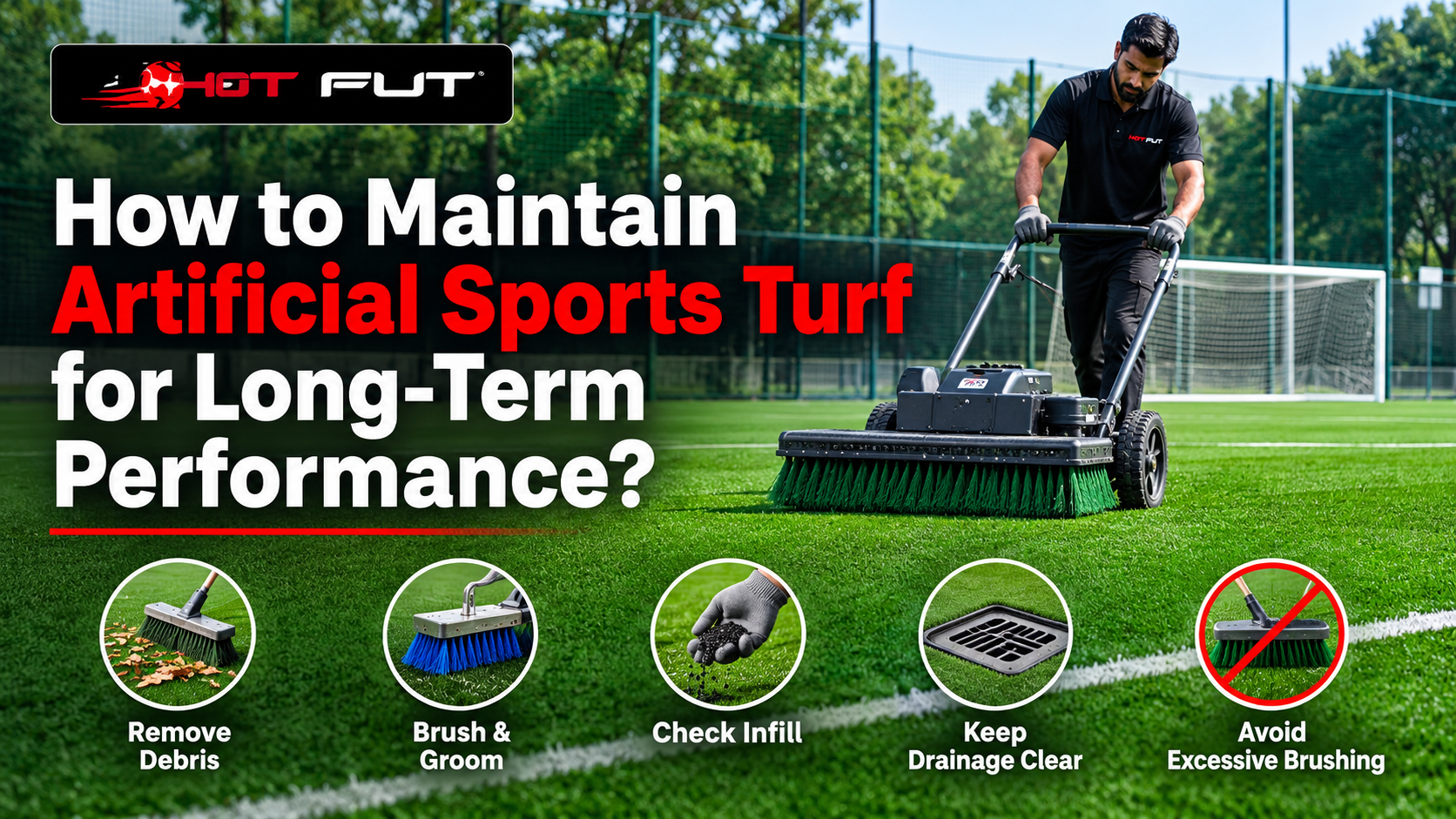
Artificial sports turf is a popular choice for football grounds, sports academies, schools, and recreational facilities. It provides a consistent playing surface and can be used throughout the year. However, many people believe that artificial turf does not require maintenance. This is not true.
Like any other sports surface, artificial turf needs regular cleaning, brushing, inspection, and proper care. Without maintenance, dirt can collect, grass fibres can become flat, and infill material can move from its original position. These problems can affect playing comfort, drainage, and overall performance.
If you own or manage a football turf, following a proper maintenance routine can help protect your investment and keep the playing surface in good condition for years.
Let’s understand some simple and effective ways to maintain artificial sports turf.
Why Is Artificial Sports Turf Maintenance Important?
Regular artificial turf maintenance helps keep the playing surface clean, safe, and ready for sports activities.
Here are some important benefits:
- Better Playing Experience: Properly maintained turf provides a more consistent surface for running, passing, and playing.
- Longer Turf Life: Regular care helps reduce unnecessary wear and damage.
- Improved Drainage: Removing dirt and organic debris helps prevent drainage problems.
- Better Appearance: Clean and upright grass fibres make the ground look fresh and professional.
- Reduced Repair Costs: Finding small problems early can prevent more expensive repairs later.
According to synthetic turf maintenance guidance, cleaning, grooming, debris removal, and infill management are important parts of a regular maintenance programme.
7 Effective Ways to Maintain Artificial Sports Turf
1. Clean the Turf Surface Regularly
Cleaning is one of the easiest ways to protect artificial sports turf. Leaves, paper, plastic bottles, food wrappers, dust, and other unwanted materials can collect on the surface during daily activities.
If these materials remain on the turf for a long time, organic debris can break down and contribute to drainage problems.
Use a soft broom, suitable leaf blower, or turf-compatible cleaning equipment to remove unwanted materials. Avoid equipment that can damage the grass fibres or disturb the infill.
2. Brush the Grass Fibres Properly
Regular brushing helps artificial grass fibres remain upright. Heavy sports activities, running, and repeated movement can flatten the fibres over time.
Use a suitable synthetic turf brush to lift the fibres and distribute the infill evenly. Brush in different directions according to the manufacturer’s instructions.
Avoid excessive brushing because it may damage the turf fibres and reduce their lifespan.
3. Check and Maintain the Infill Level
Infill is an important part of many artificial sports turf systems. It helps support the grass fibres and contributes to the surface’s playing characteristics.
During regular use, infill can move towards the sides or become uneven in high-activity areas.
Pay special attention to:
- Goalkeeper areas
- Penalty spots
- Centre areas
- Corners
- High-traffic playing zones
Check the infill depth regularly and replenish it when necessary using the material specified for your turf system.
4. Keep the Drainage System Clear
Good drainage is essential for maintaining an artificial sports ground. Blocked drainage areas can cause water to collect on the playing surface, making it difficult to use after rainfall.
Remove leaves, dirt, and other debris from drainage channels and surrounding areas. Also, check whether water flows away properly after heavy rain.
If you notice repeated waterlogging, contact a professional turf maintenance team to inspect the drainage system.
5. Inspect the Turf for Damage
Regular inspection helps identify small problems before they become major issues.
Check the turf for:
- Loose or damaged seams
- Torn grass fibres
- Uneven surfaces
- Missing or displaced infill
- Damaged boundary areas
- Problems around goalposts
If you notice loose joints or damaged sections, contact the installation company or a qualified maintenance professional for suitable repairs.
6. Remove Stains and Unwanted Substances
Sports grounds can collect stains from drinks, food, mud, chewing gum, and other substances.
Clean these areas as soon as possible. Use water and a turf-compatible cleaning solution when required.
Avoid strong chemicals, bleach, petrol, or other unsuitable cleaning products. Always check the manufacturer’s recommendations before applying any cleaning solution.
7. Schedule Professional Turf Maintenance
Basic cleaning can be performed regularly by ground staff, but artificial sports turf also needs professional inspection and maintenance.
Professional maintenance may include deep grooming, infill redistribution, decompaction, seam inspection, and drainage checks.
The frequency depends on playing hours, weather conditions, turf type, and the manufacturer’s recommendations. Heavily used football grounds may need more frequent attention.
Professional maintenance helps identify problems that may not be visible during everyday cleaning.
How Often Should You Maintain Artificial Sports Turf?
A proper maintenance schedule makes turf care easier and more effective. The following is a practical starting point. Adjust it according to usage and the turf manufacturer’s instructions.
| Maintenance Activity | Suggested Frequency |
|---|---|
| Remove leaves and rubbish | Daily or as required |
| Check for visible damage | Daily |
| Brush and groom the surface | Weekly or as recommended |
| Inspect infill levels | Monthly |
| Check seams and drainage | Monthly and after heavy rainfall |
| Professional deep maintenance | Periodically, based on usage |
Remember that these are general guidelines, not fixed requirements for every turf system.
Common Mistakes to Avoid During Turf Maintenance
Even small maintenance mistakes can affect artificial turf performance.
Avoid these common mistakes:
- Using metal brushes that can damage grass fibres.
- Ignoring leaves, dust, and other debris.
- Allowing infill levels to become uneven.
- Using harsh chemicals without checking compatibility.
- Ignoring loose seams and damaged areas.
- Using heavy or unsuitable machinery.
- Brushing the surface too aggressively.
Following the correct maintenance methods can help protect the turf and maintain a better playing experience.
Conclusion
Artificial sports turf is a valuable investment for football grounds, sports academies, and recreational facilities. However, its performance depends on regular cleaning, brushing, infill management, drainage checks, and timely repairs.
By following these simple maintenance practices, you can keep your sports ground cleaner, improve playing conditions, and help extend the useful life of your artificial turf.
If you are planning to develop or maintain a professional football playing facility, HotFut can be a useful name to explore for football turf solutions. Visit HotFut to learn more about its football turf offerings.
2. Frequently Asked Questions
1. How often should artificial sports turf be cleaned?
Artificial sports turf should be checked daily for rubbish and debris. Regular brushing and deeper cleaning should follow the usage level and manufacturer’s maintenance instructions.
2. Does artificial football turf require regular brushing?
Yes. Brushing helps lift flattened grass fibres, redistribute infill, and maintain a consistent playing surface.
3. How can I prevent waterlogging on artificial turf?
Keep drainage channels clear, remove accumulated debris, and arrange regular drainage inspections to identify blockages.
4. Can artificial sports turf get damaged over time?
Yes. Heavy usage, poor maintenance, uneven infill, unsuitable cleaning equipment, and damaged seams can affect turf performance.
5. Does professional artificial turf maintenance increase its lifespan?
Regular professional maintenance can help reduce avoidable damage, maintain playing conditions, and support the long-term performance of artificial turf.